Machine Listening is an investigation and experiment in collective learning, instigated by artist Sean Dockray, legal scholar James Parker, and curator Joel Stern for Liquid Architecture. The project launched in October 2020 with an open access curriculum site and series of online presentations, performances and pedagogical experiments at Unsound Festival in Poland, and reconvenes on Sat, 13. Mar 2021 with a new online live event, Improvisation and Control.
Staged as part of the NTU CCA Singapore’s recurring Free Jazz exhibition program, this episode focuses on the complex and evolving dialectic between improvisation and control, framed via a detour into the experimental computer music laboratories of the 1980s and 1990s where the term ‘machine listening’ first begins to circulate. Machine Listening: Improvisation and Control features new performances, presentations and works by Bridget Chappell and Allison Walker (Australia), Mattin (Basque Country), Luca Lum (Singapore), Bani Haykal (Singapore), Lee Weng Choy (Malaysia), Lee Gamble (UK) and Jessica Feldman (USA). Project page
JESSICA FELDMAN is a sound and media artist and researcher based in Paris and NYC whose work is concerned with the use of digital technologies to imagine, facilitate, or repress solidarity, especially through listening. At Machine Listening: Improvisation and Control, Jessica Feldman will present a new piece for online ensemble and commercial vocal affect sensing software. The piece uses an open graphic and text score to describe emotions, which the performers are instructed to “sound” and constantly test against the affect monitoring software, creating a counterpoint and harmonies of emotions.
LEE GAMBLE is an artist, producer, label owner and DJ of exploratory electronic music and sound who has released music on seminal electronic labels PAN and Hyperdub, as well as his own UIQ imprint. At Machine Listening: Improvisation and Control, Lee will present an essay titled 'Head Models on Rave Simulation, Involuntary Musical Imagery, Machine Learning, Neural Networks and Hallucination. The essay thinks about his work in the 2010's which dealt with hallucination, echoic memory and audio simulations - connecting it to his current interests in machine simulation via machine learning, deep neural networks and AI. It's narrated by Lee himself with some short interjections from his AI generated voice clone Moz AI.
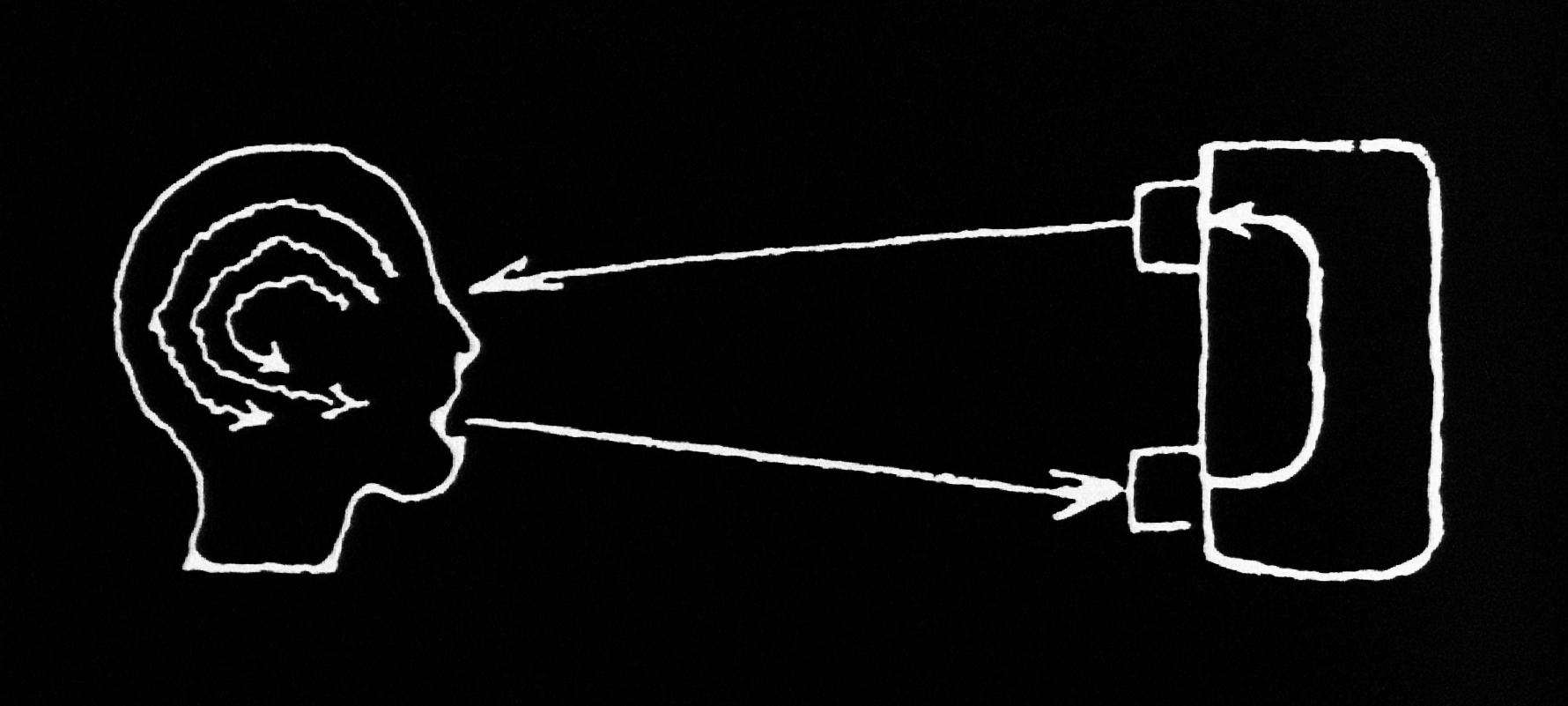
MATTIN is an artist, musician and theorist working conceptually with noise and improvisation. Through his practice he explores performative forms of estrangement as a way to deal with structural alienation, interrogating both our self-conception and sense of freedom under capitalist relations. At Machine Listening: Improvisation and Control, Mattin presents a new instructional piece titled ‘Us Listening to Machines Listening to Us’ which proposes a collective improvisation using the audio settings of Zoom.
BRIDGET CHAPPELL is an artist and organiser based in multiple locations on stolen land. They make, code, and DJ dance music as Hextape, write and perform modern classical music, create often data-driven sound installations ranging from 3D interactive electromagnetic fields, to sonifications of colonisation, to pirate radio stations. At Machine Listening: Improvisation and Control, Bridget will collaborate with composer and sound designer Allison Walker to present a new work, ‘Extreme Deep Listening’ in which participants undertake exercises in immersion therapy with a hand-turned mechanical siren, before algorithmically deconstructing and reprogramming the siren waveform.
LEE WENG CHOY is an art critic based in Kuala Lumpur who writes on contemporary art and culture in Southeast Asia, and whose essays have appeared in numerous journals including Afterall.
BANI HAYKAL is an artist, composer and musician working in the legacy of cybernetic culture whose projects revolve around modes of interfacing and interaction. At Machine Listening: Improvisation and Control, Lee and Bani will present a new machine and human generated video work titled ‘Trouble with Harmony’.
LUCA LUM is an artist, writer, and researcher whose practice pivots around writing, performance and installation, and a focus on ideas of intimacy, exchange, erotics, media, and infrastructure. At Machine Listening: Improvisation and Control, Luca will present text and scores from the ongoing project “daemon” — an airy, aural companion — addressing what might not always be rendered legible, as well as decomposing and figuring presence.
Our devices are listening to us. Previous generations of audio-technology transmitted, recorded or manipulated sound. Today our digital voice assistants, smart speakers and a growing range of related technologies are now able to analyse and respond to it as well. Scientists and engineers increasingly refer to this as 'machine listening', though the first widespread use of the term was in computer music. Machine listening is much more than just a new scientific discipline or vein of technical innovation however. It is also an emergent field of knowledge-power, of data extraction and colonialism, capital accumulation, automation and the management of desire. It demands critical and artistic attention.
WHY A CURRICULUM? Machine Listening, a curriculum is an evolving resource, comprising existing and newly commissioned writing, interviews, music and artworks. As the project grows, the curriculum will too. The curriculum can be accessed here. Amidst oppressive and extractive forms of state and corporate listening, practices of collaborative study, experimentation and resistance will, we hope, enable us to develop strategies for recalibrating our relationships to machine listening, whether through technological interventions, alternative infrastructures, new behaviors, or political demands.
With so many cultural producers – whose work and research is crucial for this kind of project – thrown into deeper precarity and an uncertain future by the unfolding pandemic, we also hope that this curriculum will operate as a quasi-institution: a site of collective learning about and mobilisation against the coming world of listening machines. A curriculum is also a technology, a tool for supporting and activating learning. This one is open source. It has been built on a platform developed by Pirate Care for their own experiments in open pedagogy. We encourage everyone to freely use it to learn and organise processes of learning and to freely adapt, rewrite and expand it to reflect their own experience and serve their own pedagogies.
Read a review of Machine Listening: Improvisation and Control in The Wire, May 2021 issue